When vision changes are easy to miss
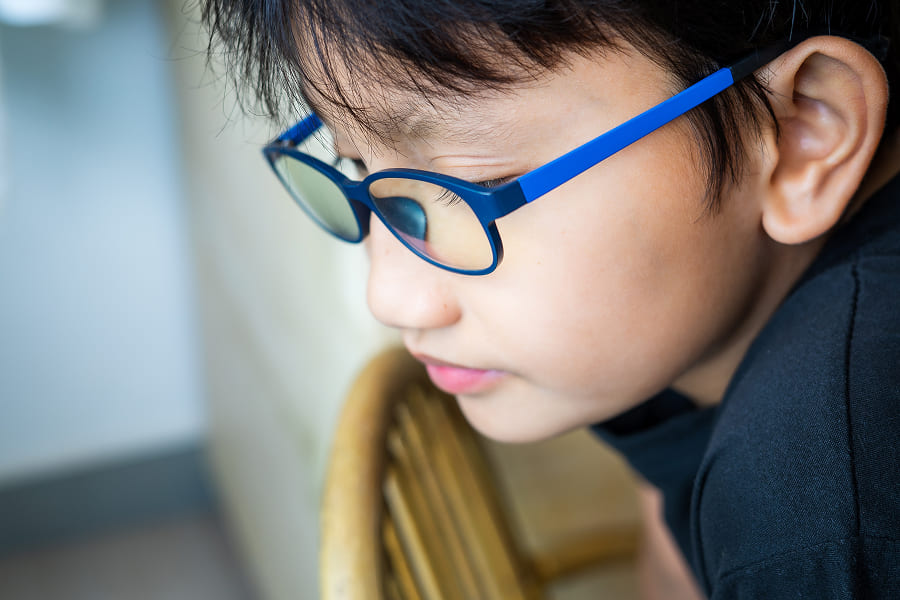
Myopia in children does not always progress in an obvious way.
In many cases, changes in vision happen gradually, especially when a child is already wearing glasses.
Because of this, small shifts in visual behavior can sometimes be the first indication that something is changing.
Common signs that myopia may be progressing
Some everyday behaviors may suggest that a child’s vision is changing:
- Sitting closer to the television, books, or digital screens
- Squinting to see distant objects more clearly
- Complaining that glasses “no longer work as well”
- Difficulty seeing the board at school
- Frequent eye strain or headaches
- Avoiding activities that require distance vision
These signs do not always indicate a significant change, but they are a reason to schedule a vision check.
Why regular vision checks matter
Not all changes in vision are easy to notice at home or in school.
Routine eye examinations help to:
- Measure real changes in prescription
- Detect early progression of myopia
- Adjust visual recommendations when needed
- Monitor eye development over time
Why updating glasses alone is not always enough
When myopia progresses, updating glasses improves clarity, but it does not explain why the change is happening.
This is why in many cases, a more structured follow-up approach is recommended to better understand visual development over time.
The importance of early detection of changes
Identifying changes early allows for more informed clinical decisions.
This helps:
- Track how vision is evolving over time
- Avoid delayed adjustments in prescription
- Maintain a consistent visual care plan during growth
When to schedule a vision evaluation
A comprehensive eye examination is recommended if:
- A child notices recent changes in vision
- Glasses seem less effective than before
- There are frequent signs of visual strain
- It has been a while since the last eye exam
Clinical approach at MONAVISTA
At MONAVISTA, pediatric myopia care is approached through a structured clinical model that integrates optometric evaluation with pediatric ophthalmology collaboration when needed.
This allows us to assess not only current vision, but also how it is changing over time.
Conclusion
Progression of myopia in children can be gradual and difficult to notice without professional evaluation.
Recognizing early signs allows for timely assessment and more informed decisions about long-term visual health.
MONAVISTA — Myopia Control Center
At MONAVISTA, we provide structured monitoring of childhood myopia through an integrated clinical approach focused on early detection, continuous evaluation, and personalized visual care.