
Myopia in children: a growing vision condition
Myopia, commonly known as nearsightedness, is a vision condition where distant objects appear blurry, while near vision usually remains clear.
In children, myopia has become increasingly common in recent years, especially during school age.
As a result, more parents are hearing this diagnosis earlier than expected.
Why does myopia happen?
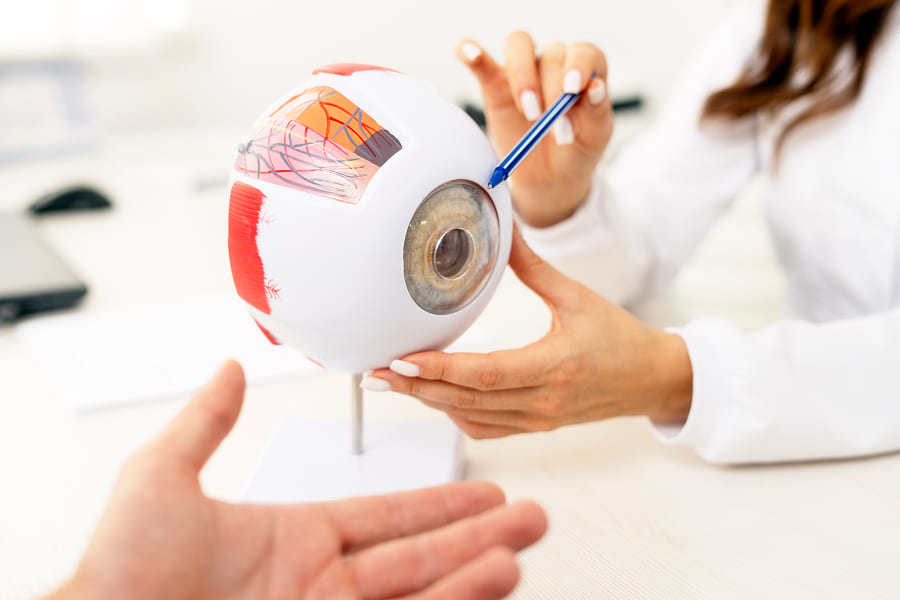
Myopia occurs when the eye develops in a way that affects how light focuses on the retina.
In simple terms, the eye becomes slightly longer than expected, causing distant images to appear out of focus.
While genetics play an important role, environmental and visual habits also contribute to its development.
Common factors associated with myopia in children
Research suggests that several lifestyle factors may be associated with the development of myopia in children:
- Increased time spent on near activities (reading, tablets, screens)
- Reduced outdoor time
- Early and intensive school-related visual demands
- Family history of myopia
These factors do not act alone, but they can influence how and when myopia appears.
Why is myopia increasing worldwide?
Over the past few decades, the number of children diagnosed with myopia has increased significantly worldwide.
This trend is mainly linked to modern lifestyle changes:
more indoor activities, earlier exposure to screens, and increased near visual demands during childhood.
Why early detection matters
Myopia is not only about needing glasses to see far away clearly.
It is a condition that can change over time, especially during childhood and adolescence when the eye is still developing.
Early detection allows:
- Identification of myopia at an early stage
- Regular monitoring of visual changes
- More informed decisions about long-term eye health
Myopia in children: more than just glasses
Glasses help improve vision, but they do not necessarily influence how myopia develops over time.
This is why ongoing monitoring and a structured approach to visual health are important in many cases.
Understanding modern myopia management
Today, there are different clinical strategies designed to monitor and manage myopia progression in children, always based on professional evaluation.
These may include specialized spectacle lens designs and structured follow-up programs tailored to each child’s needs.
At MONAVISTA, this approach is developed through our Myopia Control Center, where optometric care and pediatric ophthalmology collaboration work together to provide continuous monitoring.
When should a child have a vision exam?
A comprehensive eye examination is recommended if a child:
- Sits very close to screens or books
- Complains of blurry distance vision
- Has a family history of myopia
- Shows difficulties in school related to vision
Conclusion
Myopia in children is becoming increasingly common, but early detection and proper monitoring can make a meaningful difference in long-term visual development.
Understanding what it is and how it behaves is the first step toward making informed decisions about a child’s eye health.
MONAVISTA — Myopia Control Center
At MONAVISTA, we approach childhood myopia through an integrated clinical model that combines specialized optometric evaluation with pediatric ophthalmology collaboration when needed.